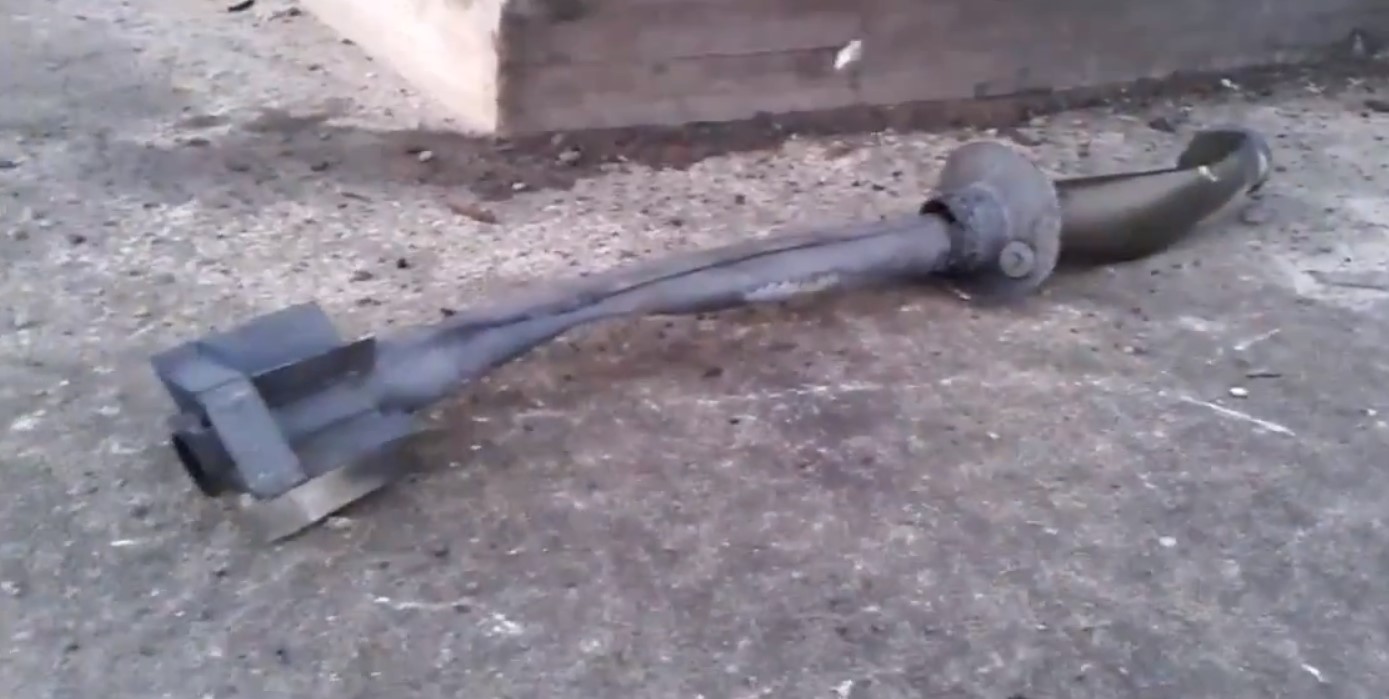
Here's the second set of answers from two more chemical weapons specialists on the use of chemical weapons in Syria. Part one can be found
here.
Dan Kaszeta, a US Army Chemical Corps veteran, provides some very detailed answers on sarin.
What form does sarin take?
Sarin (also know as GB) is a liquid at normal temperatures. It has the appearance and general consistency of water. The term “sarin gas” is misleading. It is not a gas at normal temperatures. (For example, chlorine is a gas at room temperature.) It is liquid between the temperatures of -56º C and approximately +150º C, although it evaporates in proportion to the temperature.
Sarin has a viscosity (how thick the liquid is) slightly higher than water, although my own experience is that you can’t tell with the naked eye.
Vapour pressure. Sarin has a vapour pressure. In other words, it has a tendency to evaporate into a vapour state from liquid state, just like many liquids. Water, alcohol, petrol, acetone, etc. all have vapour pressure. Sarin has a slightly lower vapour pressure than water. This means (all other factors being equal) that a drop of Sarin at 25º C should evaporate slightly slower than a drop of water. In practice, it often evaporates quicker than water. I’ve seen a drop of water next to a drop of Sarin on the side of a rifle in a test chamber. This is because there is already water vapour in the air (i.e. humidity). So, the rule of thumb that I learned is that Sarin evaporates like water in the desert.
It should be noted that at high temperatures, Sarin evaporates very quickly. This makes it a “non-persistent” nerve agent. At room temperature or higher, terrain, clothing, equipment, etc. will not remain contaminated for long periods of time as any liquid droplets will evaporate. This is in contrast to so-called “persistent agents” (e.g. GD, VX) which have lower vapour pressures and evaporate much slower.
Sarin vapour is heavier than air.
Can it be liquid, gas, powder, etc?
The best way to describe Sarin is that it is a liquid that gives off vapours. It should be noted that many ways of dispensing Sarin (see weaponisation below) cause the formation of an aerosol – a finely divided cloud of droplets. Aerosols behave much like gases and vapours.
“Dusty agents”/ Powder: There’s no way that I know of to dispense Sarin as a solid or powder, although I can’t completely rule out the possibility that someone has developed a “dusty agent” form of Sarin. There is some literature out there on the possibility of “dusty” chemical warfare agents. As far as I know, this was only ever a possibility with really low vapour pressure agents, not fast evaporating agents like Sarin. The only benefit I can think of for making a “dusty sarin” (in reality, not Sarin as a powder, but small particles impregnated with sarin) would be to slow down the evaporation time of the Sarin… i.e. increase its persistency. But doing so would decrease the rate at which the agent is dispensed in vapour form, thus reducing its immediate lethality somewhat. And immediate lethality is the point and purpose of Sarin. It would seem to have little utility and an awfully difficult way of engineering some persistency into Sarin. It would be far easier to use a more persistent nerve agent instead. Or it may be possible to thicken Sarin with an additive. The US government applied for a patent to do so in 1969.
Does it have a particular smell or colour?
It is colourless. Pure sarin has no odour. Even if it did have an odour, it would be difficult to tell as a concentration detectable by a human nose is probably a lethal exposure.
How is sarin typically weaponised?
By “weaponised” we generally mean “how is this chemical put into a device or munition in order to function effectively on the battlefield. In order to answer this question we must apply the characteristics of the liquid Sarin to the battlefield environment. Because of its physical and toxicological characteristics, the most useful methods of employment for Sarin or any other non-persistent nerve agent are means and devices that rapidly disperse droplets or aerosols in a concentration high enough to cause immediate casualties. Dispersing a payload of Sarin in one load of liquid all in one place (like dumping a bucket) causes a great hazard in one spot, but not wide effects. A device that did this would be less useful than a conventional explosive device of similar size. Likewise, dividing it too finely over a large area will cause it to disperse quickly and not have a concentration adequate to cause incapacitation or death. Again, such a device would have little or no value in comparison to a conventional device of similar size, weight, or shape.
The overall guiding principle for weapon design with Sarin was that is was meant to rapidly cause casualties, and as such, weapons/munitions were designed to detonate/disperse at ground level. (As opposed to persistent agents, which are designed to contaminate terrain and equipment, which generally burst/dispense/detonate some meters above ground level in order to spread a radius of droplets.) During the Cold War, the various superpowers devoted a lot of time, expertise, and money to studying and testing various weapon designs to see how effective different munitions and configurations might be. Rather a lot of this information is now out in the public domain, either directly in form of declassified documents or indirectly, e.g. we can see the types of weapons that were the result of testing and optimisation and draw our own conclusions as to what types of weapons work and which ones don’t. Drawing on US and Soviet experience, the following are the classic weapons for dispensing Sarin on the battlefield, all fuzed to detonate at surface:
- Artillery shells
- Mortar shells
- Air dropped bombs
- Cluster bombs
- Missile warhead
- Rocket warhead
- Land mine
It should be noted that some types of weapons that aren’t so good for Sarin:
- Hand grenade – Very small payload possible. Possibiity of leakage killing soldier handling it. Soldier likely to have to be in protective gear the whole time. Soldiers throwing grenades in protective gear are probably going to be less accurate and achieve less distance.
- Grenade launcher round – same liabilities as hand grenade. And very low payload.
- Aerial spray devices – Unless the helicopter or aircraft is almost at ground level (highly unlikely), the Sarin would be too dispersed to have much effect. Aerial spray devices are better for more viscous persistent agents (like Mustard or VX)
- Anything fuzed for aerial burst. Likely to spread the droplets
- Any explosive dissemination device with too little or much explosive. I won’t specify what it is (for obvious reasons) but there is an optimum ratio of charge to agent. Too little leaves a puddle, too much spreads it too thin.
Some notes about types of “agent fills”. An “agent fill” is a term that describes exactly how the chemical warfare agent is configured inside. There’s three basic kinds of agent fills:
- Unitary: This means the agent is in the weapon in one big pool.
- Binary: Binary fills mean that two separate components are mixed to created the chemical agent. Generally, this is done for the purposes of safely handling the munitions and to avoid having to store chemical weapons or filled munitions. Sarin could be mixed on-site and poured into empty shells/rounds or munitions could be designed to mix two different components in flight. To my knowledge, this was done with GB and VX. A well-made binary weapon would have little or no difference from a unitary fill. A poorly made one would have a high dud rate and would be generally less effective.
- Submuntions: A highly effective way of dissemination would be a munition that scattered bomblets or submunitions at some height, with the submunitions designed for ground impact detonation. Other factors being equal (…but they often aren’t), submunitions are generally considered a more efficient method of dispensing Sarin.
A note about “dud rates.” Any class of munition has a dud rate, i.e. the percentage of shells/rockets/etc. that fail to function as intended. Anecdotal evidence is that some older chemical weapons may have quite high dud rates. Even many modern conventional artillery rounds have non-trivial dud ratesv there’s no physical mechanism to explain why chemical rounds would have a radically lower dud rate. This means that if any significant use of chemical warfare happens, there’s going to be an unexploded shell out there somewhere, which will be of great intelligence value if it can be safely retrieved. (A task not for amateurs!)
Have you ever heard of sarin being used in a diluted form, or mixed with other chemical substances to make it less lethal?
There seems to be little point in trying to dilute Sarin to have some kind of non-lethal effect and I have no knowledge of this ever happening. The sub-acute, low-level signs and symptoms of nerve agent poisoning are annoying but not terribly debilitating. Giving a bunch of people a runny noses and pin-point pupils has far less tactical usefulness than using conventional riot control agents or the generally non-lethal vomiting agent adamsite. Such agents can easily cause debilitating effects, whereas with nerve agents, there’s a fine razor’s edge, not easily (or at all) controllable between incapacitating dosage and lethal dosage. Why risk the opprobrium of the international community and the possibility of triggering international intervention by using just a wee bit of Sarin? There seems no point.
Sarin is designed to injure and kill. There’s not much leeway between the incapacitating doses and lethal doses with Sarin (1000 mg and 1700 mg respectively as the ED50 and LD50) and the concentration that would lead to a person absorbing 1000mg Sarin would quickly lead to absorption of a lethal dose of 1700mg.
A number of reports have claimed to have proven the use of sarin through tests on hair, clothing, blood, tissue, and urine samples.
I will address each of these types of samples in turn:
Blood:
Sarin can be directly and indirectly detected in blood samples. Several methods have been studied for detection of sarin in blood. Several studies have been described in the academic literature. There are also indirect methods that detect decomposition products of sarin or the physiological effects of sarin.
Experience from the Tokyo subway incident in 1995, documented by the OPCW shows that one of the decomposition products of Sarin is a chemical known as IMPA is detectable in blood.
Sarin’s method of action is to inhibit a substance called acetylcholinesterase, which is used by the human nervous system. At least one study shows that the presence of a nerve agent could be deduced by examining post-mortem blood samples for presence or lack of acetylcholinesterase, up to a week after death. A person who has died from Sarin exposure would have little or no acetylcholinesterase present. It should be noted that this would only indicate the presence of a nerve agent and would not specifically indicate Sarin versus any other nerve agent (or even organophosphate pesticide intoxication) nor would it conclusively indicate nerve agent as a cause of death, as other factors may have killed the victim, such as conventional trauma.
Urine
One of the decomposition products of Sarin in the human body is methylphosphonic acid. A study shows that this substance is detectable in urine by use of mass spectrometry. This particular substance is not specific to Sarin. (The journal article says it is a decomposition product of cyclosarin, Soman and one type of VX as well.) It should be noted that it can take some time for chemicals absorbed in the human body to end up in urine. An immediate post-exposure sample may not have any evidence of exposure.
Tissue
A study from 2004 using guinea pigs indicates that plasma, heart, liver, kidney, and lung samples can indicate the presence of either Sarin or Soman using gas chromatography and mass spectrometry.
Clothing, Skin, or Hair
Clothing, skin, or hair could get contaminated by droplets of Sarin. I cannot find any literature on the absorption of Sarin into human hair, but common sense would dictate that any water-like liquid could be trapped in hair. Because of the rapid speed at which Sarin evaporates, a sample would need to be collected quickly and kept in a sealed container. A lowered temperature would help. In such a case, the Sarin might actually be most easily identified in vapour form in the headspace of the container, having desorbed from the sample itself.
How would these samples be tested for the presence of sarin?
First of all, my expertise is not very strong in the laboratory techniques used for such analysis. My expertise is strongest in field detection techniques. To the best of my knowledge, the generally accepted gold-standard analytical technique is the combination of gas chromatography and mass spectrometry (GC/MS) which is widely used by chemists to identify molecules. GC/MS is a sophisticated technique requiring training and expensive equipment mostly found in labs. There are some portable GC/MS devices, but they are generally used in vehicles or mobile labs and aren’t handheld devices.
The following are field technologies which also have relevance in laboratory settings, given the appropriate equipment. All have pros and cons.
- FTIR: Fourier transform infrared – Used to analyze a gas, vapour, liquid, or solid sample. Not real time. An identifier, not a surveillance or detection tool.
- Raman: Laser-based identification technique that can identify liquids or solids. Not real time. An identifier, not a surveillance or detection tool.
- Ion Mobility Spectrometry (IMS): Fast acting analysis of gas and vapour. IMS is the backbone of military field electronic nerve agent detectors. Works very quickly and is very sensitive. Some problems with false positives, varying from model to model. Some units will only detect, others will identify as well (i.e. discriminate VX from Sarin), while others provide a qualitative (“Hi, Med, Low”) or quantitative (“25 mg/m3”) measurement.
- Flame ionization: Used by a family of French chemical warfare detectors. Broadly similar to IMS in application
- Photoionization: Commonly used in civilian HAZMAT detectors. Generically detects toxic gases, but cannot identify chemicals. Would not be able to tell difference between, say, ammonia, acetone, and Sarin. I only mention this because it is so prevalent in civilian fire departments.
- Wet chemistry: A variety of manual chemistry techniques ranging from very sophisticated to very simple. Too many different kits and tools to generalize, other than to state that the cheap tools are easy to use but not very specific, whereas the expensive tools can be good but hard to use. There are some specific nerve agent detection techniques in this category, but they generally have difficulty discriminating between types of nerve agent.
If sarin was detected in hair and urine wouldn't that suggest small, non-lethal quantities, being ingested over a period of time?
Sarin detected in hair might theoretically be a small droplet that was in the hair as a direct result of a Sarin attack. However, the sample would have to have been collected quickly and sealed up. (See above) I don’t know of a biological mechanism that would result in Sarin or byproducts ending up inside human hair through hair growth. I checked the literature and found nothing in this regard.
As far as urine is concerned, I can’t find direct literature in my cursory search about how quickly Sarin or decomposition products end up in urine. However, Sarin acts on the bladder and kidneys rather quickly, so this cannot be ruled out. One Japanese Sarin victim of the lesser-publicized Matsumoto incident (previous to the infamous Tokyo incident) had measurable Sarin decomposition products in his urine.
If sarin was on clothing how hazardous would it be to handle that clothing without correct protection?
Very hazardous. Depending on the amount of contamination, possibly lethal. Full head-to-toe protection would be needed. The fastest acting hazard would be vapour from the clothing.
Is it possible other substances could produce false positives for sarin?
Yes. Generally, the more sophisticated and expensive the detection technique, the less scope for false positives. The false positives depend entirely on the detection method. IMS is often fooled by chemicals of the same molecular weight as sarin. Organophosphate-based pesticides are very similar chemicals to nerve agent chemical weapons, so they may pose a false positive.
After a suspected sarin attack how should the victims be processed, and what precautions should be taken?
An effort should be made to triage the victims and deal with the most severely affected ones first. Triage guidelines are available in various resources. The general acronym ABCDD can be used to describe the field medical interventions required for nerve agent exposure. This stands for Airway, Breathing, Circulation, Drugs, and Decontamination. A general broad guideline for dealing with a serious sarin casualty is as follows:
- Move casualty out of danger. If possible remove contaminated clothing
- Establish and maintain airway, through intubation if necessary
- Control secretions through suction
- Ventilate with oxygen if available, using bag-valve mask if necessary. Regular air is better than nothing if oxygen is not available.
- Monitor pulse, commence compressions if pulse stops
- Administer atropine, pralidoxmine (or other oxime, in accordance with local protocols), and diazepam via intramuscular injection.
- Decontaminate any possible skin exposure. Soap and water are fine, if specialty decontaminants are not available. Even plain water will work in a pinch. Flush eyes with water.
- Establish IV access to allow further antidote administration
- Administer additional antidotes as required
- Move to definitive care
- Constantly reassess airway, breathing, and circulation en route.
If these precautions are not taken what is likely to happen to the people coming in contact with the victims?
If the victim was only exposed to Sarin in vapour form, which is quite possible, then there’s no particular hazard. If a victim has been exposed to droplets or liquid, then persons coming into contact with the victim are likely to be affected if they are unprotected. Due to the rapid rate at which Sarin evaporates, the principle hazard will be respiratory hazard, although contact hazard risk cannot be eliminated. Droplets on skin, hair, and clothing are likely to evaporate and pose a respiratory hazard both to the victim and bystanders/helpers.
How long would it take sarin to become harmless, or dissipate? In general terms are we talking minutes, hours, weeks?
Minutes to hours, depending on wind and air temperature and the volume of liquid sarin. Sarin liquid evaporates quickly. Vapour will disperse quickly in the open, but could last a very long time in a combined space.
Steve Johnson is Lead for Explosive and Hazardous Forensics at Cranfield university
Sarin
How is sarin typically weaponised?
Militaries have used a wide range of techniques. Artillery shells, missiles and rockets are probably the most commone, although drop/spray tanks and even jet engines (Russia) have been tried. In Tokyo it had been intended initially to aerosolise but ended up being stabbed bags left to evaporate (which is pretty good due to the speed at which it evaporates).
What form does sarin take? Can it be liquid, gas, powder, etc? Does it have a particular smell or colour?
Its normal state is liquid, although it steadily evaporates at a similar rate to water. Its Boiling point is 158 degrees C, Freezing point is -56.
It’s unlikely to be a gas although it may be produced as an aerosol from a mechanism. It would not be a powder unless it was absorbed on to a powder or solid in order to produce one.
Have you ever heard of sarin being used in a diluted form, or mixed with other chemical substances to make it less lethal?
Not to make it less lethal – Binary production of sarin from separate less lethal and often more stable chemicals is practical and has been done in the past. The Tokyo attacks often refer to dilute sarin but that was unlikely to have been to make it less lethal.
A number of reports have claimed to have proven the use of sarin through tests on hair, clothing, blood, tissue, and urine samples. How would these be tested for the presence of sarin?
The metabolic uptake of Sarin and its behaviour within the body is relatively well studied. For tissue samples there are a number of markers that investigators can look for and there efficacy is dependent on the time after exposure and the route of introduction (inhalation will get it in to blood fast, presence in urine is often many hours after exposure). Markers that can be looked for are:
- Sarin – unreacted pure sarin.
- Acetylcholinesterase(AChE and Acetylcholine – This only gives an indication that the nervouse system has been disrupted , potentially, but not exclusively by a nerve agent or substance behaving like one.
- isopropyl methtylphosphonic acid (IMPA) – a breaking down of Sarin, sometimes called the hydrolysis product. Pretty good and a number of studies have looked at its detection in blood and urine of Tokyo victims. Fairly hard to think of reasons for it to be in blood other than exposure to sarin.
- methyl phosphonic acid. A further breakdown product but with more potential causes.
- Macro molecules from other Sarin/protein interactions (Phosphylated tyrosine). Not impossible and potentially good for investigation longer after the exposure point.
- Butyrylcholinesterase. While AChE is found more in the red blood cells BuChE is found more in the serum of blood. It is less affected by Sarin, but in the event of a high exposure you would expect to see it affected as well and this can be a good ratio to examine when trying to assess exposure history with samples that have a poor patient history (much like we currently have).
Different markers fall away at different times after exposure. IMPA tend tobreakdown to MPA. Ache levels return to normal after about 30 days. BuChE around 50 days.
If sarin was detected in hair and urine wouldn't that suggest small, non-lethal quantities, being ingested over a period of time?
Potentially. Or a small single dose. Again working up a full spectrum of the biomarkers should be able to help understand that.
If sarin was on clothing how hazardous would it be to handle that clothing without correct protection?
It’d be pretty stupid but if it were pure(ish) sarin then it evaporates at about the same speed as water. So in many cases the levels left could be very low. Some countries are fairly casual about contamination of items that have been in the vicinity of sarin because they don’t believe the vapour condenses on surfaces easily – i.e. being near some sarin won’t contaminate you or clothing unless you touch it. That’s not necessarily a universally accepted fact though.
Is it possible other substances could produce false positives for sarin?
In the medical tests – yes as discussed a little above. IMPA and Phosphorylated tyrosine are pretty good though. In any event though they would still be indicating a significant chemical injury to the person from a pesticide perhaps. That’s why it is so important to have a context and medical history of the person from whom the samples are taken in order to make a diagnosis. It is a fact of modern medicine that a large amount of diagnosis is based on symptoms and context/case history – which is one of the reasons people are so twisted about these samples. They need context no matter how good the test.
After a suspected sarin attack how should the victims be processed, and what precautions should be taken?
If these precautions are not taken what is likely to happen to the people coming in contact with the victims?
It really depends on the amounts of agent and how the people were exposed. You could treat sarin victims with no protection and be ok, perversely those exposed to CS will (and there is a lot of evidence of this in civil cases) present a very high hazard to medical staff due the the difficulty in decontaminating riot control agents.
How long would it take sarin to become harmless, or dissipate? In general terms are we talking minutes, hours, weeks?
Minutes in Syria during the day.
Saraqeb
The Saraqeb attack is probably one of the mostly well documented alleged chemical weapon attacks of the conflict. Canisters inside containers filled with white-grey powder were reportedly dropped from a helicopter, landing in two locations, one near a road, where no victims were reported, and the other in the courtyard of a family home. It was reported that immediately after impact, one of the residents entered the courtyard, and collapsed shortly afterwards, later dying.
Shortly after the first victim entered the courtyard more members of the family entered, and also fell ill, as did people responding to the attack. Between 11 to 13 people were reportedly effected, with only one death reported. Video from the road-side location filmed some time after the attack would show children playing near to the remaining white-grey powder with no ill effects reported. (A more detailed breakdown can be found
here)
Would the above scenario match what you'd expect to see if Sarin has been used in the attack?
Not really. The powder is unusual and the death rate is very low. It’s certainly not what one would normally expect.
In common with many alleged chemical attacks in Syria the medical staff appears to have no protective gear. If this was a sarin attack, how likely would it be that the medical staff would be effected, and how long would it take for the medical staff to become effected?
This depends on if the patients are externally contaminated. They may just have inhaled it. Speed of action on medical staff if they were contaminated would depend on the level. If very low there may be no real noticeable effects given the general alarum in a casualty receiving post. If significant then within minutes. In fairness though the fact there is a patient and not a corpse would suggest that the level of contamination is low or the agent is non-lethal. As death from Sarin is pretty rapid.
One video shows a car pulling up with at least one victim inside. If this was a sarin attack, how likely would it be that the inside of the vehicle would be contaminated by sarin? If the victim inside the vehicle had been exposed to sarin is it likely other passengers in the vehicle would fall ill?
Syrian vehicles are far from airtight. If the victim had inhaled then there is no real reason for the car to become very contaminated. Potentially the victim migh exhale some contamination (this certainly happens with cyanide suicide).
Some people have proposed a scenario where a diluted mixture of sarin and other substances was used in the attack. If that was the case, would your answers to the above questions change significantly?
Not really other than it might be possible to create a powder with another substance.
The canisters recovered from the scene of the attacks matched canisters also recovered from an attack reported in Sheikh Maqsoud in Aleppo, where there were again claims of them being dropped from a helicopter, with photographs showing the canister remains covered in white-grey powder.
The same design of canister has also been filmed in a cache of weapons reportedly captured by the Syrian opposition from the Syrian military, and
a journalist in Syria has shown the image of the canister to various armed group, many of which have claimed to have seen them in the possession of opposition fighters, claiming to have captured them from the Syrian army.
There's video footage from the Saraqeb attack showing what's claimed to be the canisters falling through the sky, appearing to produce smoke or a white gas, as well as producing light. The canisters appeared to show signs of heat damage around holes along the body of the canister.
Considering the various information gathered about these grenades is it likely they would have contained Sarin?
Not really – sounds like WP or CS
Is it possible the could have contained another substance that could have caused symptoms seen in the victims of the attack?
In the grenades? Seems far fetched and the mixing of liquid sarin and a riot control agent dissolved in to solution would be a beast to get stable as it could affect agent stability.
Could one of those possibly substances produced a false positive for sarin?
Not as far as causing death and not on the basis of the medical test results.
Is it reasonable that the contents of this grenade could have been emptied and replaced by sarin?
Possibly.
Khan al-Assal
The Russian government has claimed the Syrian opposition was responsible for the Khan al-Assal attack, with a DIY rocket delivering a payload of Sarin.
What do you think would be involved in putting together a DIY chemical warhead for a DIY rocket?
Crude devices are not that hard. Removal of explosives or whatever payload had been carried, followed by introducing the agent. You would need protective gear and it wouldn’t be very safe doing the filling.
Accuracy would be lost (if a missile) and performance of rockets could be affected by different weight distribution. I don’t really want to go in to too much detail about the how, lest I give ideas or advice, but early CW munitions were very simple.
If you don’t really care where it goes then its achievable.
Considering the Russian government's claim that a DIY rocket was used in the attack, what would be the most effective dispersal method once the rocket reached it's target?
Air burst or base ejection were used by military munitions but require more complex fuses. If aimed at hard targets then you’d get a level of dispersal by simple impact, but if it hit the earth then the payload could just get driven in to the earth.
As with the other alleged chemical attacks in Syria the staff treating the wounded appear not to be using any protective clothing. Would this have resulted in medical staff and responders being contaminated if this was a sarin attack?
Not necessarily, see above.